Patient Sues Dentists for Trigeminal Neuralgia, Without Evidence

Marc Leffler, DDS, Esq.
November 18, 2025

Reading time: 8 minutes
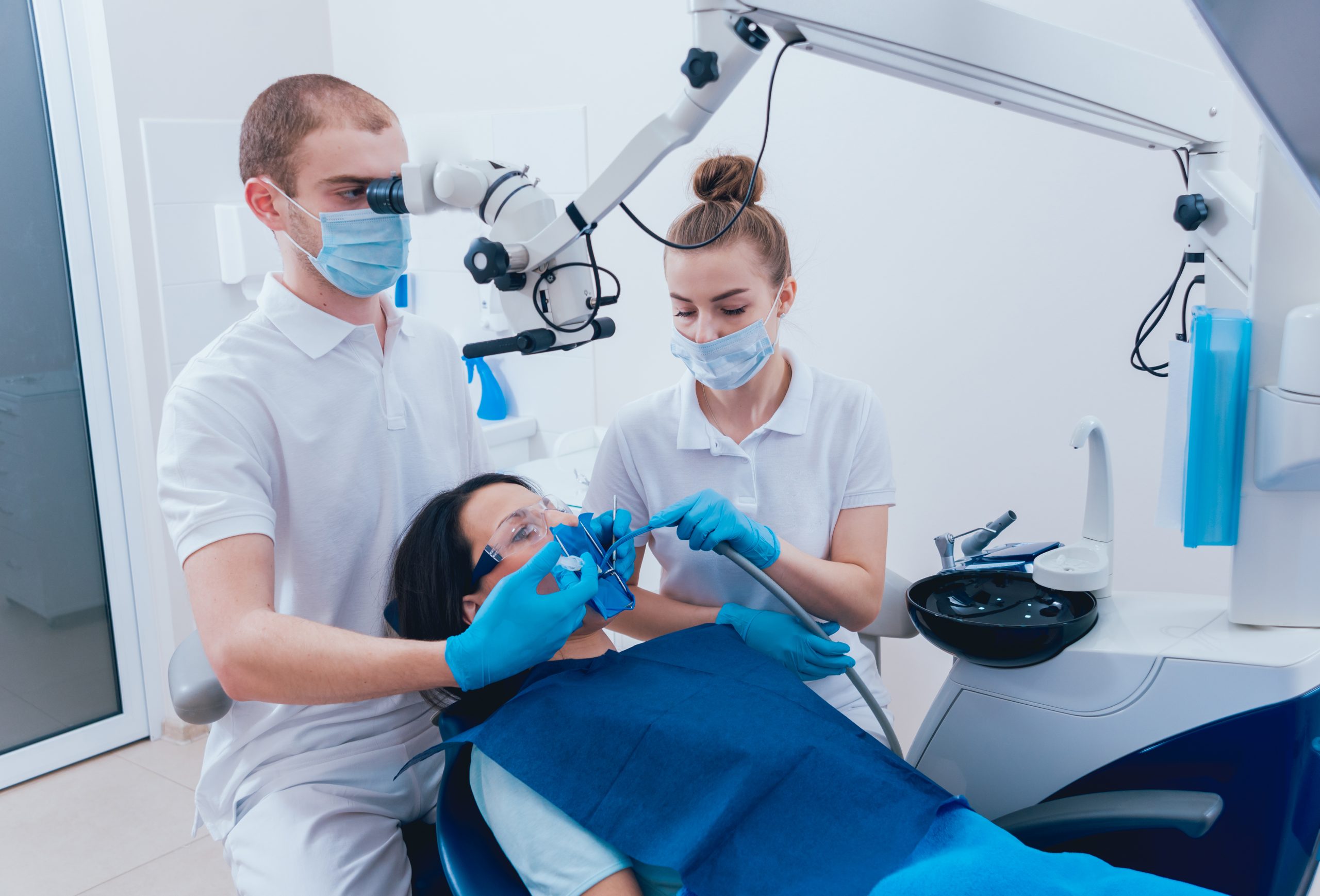
It’s not always clear if a patient’s injury is due to the dental work or something else. In this case study, a patient presents to a dentist with pain in her upper right central incisor. During root canal therapy, the endodontic file separates. The dentist refers the patient to an oral surgeon for an apicoectomy. Post-operation, the patient complains of chronic pain and is told to return for a follow up appointment. Instead, the patient sees a pain management physician who diagnoses trigeminal neuralgia and claims it is due to the dental work, despite lacking evidence. Later, the patient sues the dentist and surgeon for negligence.

Key Concepts

  • Multiple negligence claims against two defendants
  • Differentiating science and emotion in litigation 
  • Importance of solidarity between multiple defendant dentists

Background Facts

K, a basically healthy 58-year-old woman, presented to her general dentist of many years, Dr. J, having not seen him for 18 months, now complaining about recent and progressing pain in her upper right central incisor (tooth #8), which had been crowned since her early 30s. Dr. J examined K and found the tooth to be tender to percussion, with a sizeable, well-circumscribed periapical radiolucency. The tooth tested non-vital. Dr. J explained to his patient that she needed root canal therapy, which he could at least start that day, if not complete. K agreed to proceed.

With local anesthesia, Dr. J made routine access into the tooth and began to use endodontic files, all with a rubber dam in place. When he removed the second file in his progression, he noted that its end was missing about 4mm, so he presumed that the file had separated. A periapical film confirmed the suspicion that the tip of the file was lodged near the tooth’s apex, with half of its length projecting beyond the apex. Dr. J was very experienced performing endodontics, especially on anterior teeth, so he worked to try to remove the separated file, unsuccessfully.

After doing that for almost an hour, he explained to K what her options were in order to try to save the tooth: refer to an endodontist to complete the root canal therapy, or refer to an oral surgeon to perform an apicoectomy. Dr. J was of the view that an endodontist would not likely be more successful than he had been, and he was concerned about any compromises in the care, due to the large periapical lesion. K opted for the oral surgery route, and immediately went to the office of Dr. W, who had told Dr. J that she would perform the apico as soon as the patient arrived. Uneventfully, Dr. W added additional local anesthetic to the already-numb site, raised a semi-lunar buccal flap, and entered through the thin buccal plate to visualize and remove the apical 2-3mm of tooth and the partially extruded endodontic file, excising the lesion before placing a retrograde seal and suturing the site.

At K’s post-operative visit with Dr. W, the area was stated to have “chronic dull pain,” but it looked clinically stable, so the sutures were removed, with K given an appointment to return in a month if she continued to have any symptoms. Instead of following-up with either Dr. W or Dr. J, K presented to her primary care physician the next week, complaining of ever-increasing and severe pain. The PCP referred K to a pain management physician, who, after seeing K for several consecutive visits, made a diagnosis of trigeminal neuralgia because of her continued pain despite non-narcotic and then narcotic analgesics. The pain management doctor voiced that “it had to be the dental work” that caused this. K had a brain CT and MRA performed, which showed nothing abnormal, and began a course of a common anti-seizure medication – often also given for neuropathic pain – prescribed by the pain management practitioner. The symptoms never abated, and K even claimed that the constant pain worsened to the point that she could not concentrate enough to read a book, watch a movie, or drive a car.

Legal Action

Encouraged to do so by her family members and friends, K sought out an attorney whom she located on the internet as one “specializing in trigeminal neuralgia cases: if you have trigeminal neuralgia from poor dentistry, we can get you large sums of money.” After K’s first meeting with the attorney, the attorney brought suit on her behalf against Dr. J and Dr. W, alleging negligent treatment that directly led to trigeminal neuralgia. Of note is the fact that the sole physical injury claimed throughout the entire litigation was trigeminal neuralgia, and nothing about any other pain condition at all.

The usual course of discovery ensued, with the taking of depositions and the exchange of documents and expert reports. K’s pain management doctor would draw the causal connection between the dentistry and the trigeminal neuralgia – “it must have been the dentistry” – with her attorney’s dental and oral surgery experts claiming that Dr. J used improper and excessive pressure so as to negligently break the file, and Dr. W improperly elevated the buccal flap too high, thereby injuring the infraorbital nerve. Neither of the defendants was willing to entertain the possibility of settlement, both steadfast in their views that the treatment they had rendered was proper in all regards. Each exercised their malpractice policy consent provisions, directing the case to trial.

At trial, K testified to her constant pain, although she never spoke about any trigger that set off a period of increased pain, and she never testified to any sharp, stinging pain. The pain was dull, chronic and constant. The defendants’ dental and oral surgery experts, respectively, explained to the jury that Dr. J and Dr. W used appropriate standard technique at every step in their own procedures, including a discussion as to why and how files non-negligently separate, that the photos of the gingival scar showed the incision made was at the proper location, and that there were likely “dental fixes” to her claimed problems. But K never returned to either of them, depriving them – and K as well – of the opportunity to dentally work toward resolving her complaints.

Perhaps the most significant trial witness for the defendants was a university-based neurosurgeon who had published about trigeminal neuralgia and treated many such patients who came to him from across the country. His testimony was decisive: trigeminal neuralgia, he opined, is not caused by dentistry or any other peripheral act, but instead a result of an intracranial pulsating vessel in close proximity to a portion of the trigeminal nerve, which erodes away the nerve’s sheath, exposing the “wire” portion of the nerve and creating the equivalent of a “short circuit” that periodically creates sudden, short-lasting, and severe sharp pain. A diagnosis of trigeminal neuralgia was, according to the neurosurgeon, completely excluded in K because her non-triggered pain – which he did not dispute as being as described – is not at all what, “by definition,” exists in trigeminal neuralgia patients. Her normal intracranial radiologic studies provided conclusive objective evidence of the absence of the proximate nerve-vessel relationship that occurs in trigeminal neuralgia.

As the jury deliberated, the foreperson sent a note to the judge, asking whether they can consider pain other than from trigeminal neuralgia. The judge responded that, because trigeminal neuralgia was the only claimed injury, they could not. Shortly thereafter, the jury returned a general verdict in favor of both defendants.

Takeaways

Addressing the verdict first, a general verdict is one by which the jury simply concludes “for the plaintiff” or “for the defendant(s),” with no specificity. Special verdicts, on the other hand, require that jurors answer direct questions, such as “was the defendant negligent?,” and “did that negligence cause injury to the plaintiff?” The difference is jurisdictionally-specific. But in this case, it is certainly fair to hypothesize that, had other types of pain been pled, or had the judge allowed the jury to consider other types of pain besides trigeminal neuralgia, a verdict for the plaintiff seems at least likely.

This concept leads to two important points: (1) the particularity with which a plaintiff’s attorney pleads the case is critical to a case result; and (2) the defendants’ neurosurgery expert’s precise anatomic testimony, with the guidance of experienced defense counsel, demonstrated itself to be a far cry above and beyond K’s pain management doctor’s claim that “it must have been the dentistry,” implying a mere temporal relationship between the dentistry and the claimed symptoms. The value of well-credentialed experts, who can exhibit true proficiency, cannot be underestimated in the trial setting.

The defendants in this case practiced in different areas of dentistry, so the “sharing” of a single standard-of-care expert between them would be challenging at best, and disallowed in many jurisdictions. But the situation is different when it comes to experts who testify about questions of causation and/or injuries, so when possible and practical – which is far from a common occurrence – the presenting of a completely united front as between the defendants can send the jury a strong message, namely that there is no question that there can be only one way to interpret a certain set of issues.Trigeminal neuralgia is a devastating disease, and it is described that way in detail by plaintiffs’ attorneys, who claim, as in this case, that dentistry or oral surgery is the culprit in getting there. The internet is replete with large numbers of “trigeminal neuralgia attorneys,” many of whom advertise and argue that they will obtain large recoveries against dentists and oral surgeons, often times relying upon non-scientific claims that garner jury sympathy. Defense teams of attorneys and experts can prevail through approaches that place science above emotion, while still exhibiting empathy for patients who might legitimately experience pain. But there is a real difference between the pain of trigeminal neuralgia and nearly everything else, and that point is one of several which was driven home at this trial.

			WP_Query Object
(
    [query] => Array
        (
            [post_type] => post
            [showposts] => 3
            [post__not_in] => Array
                (
                    [0] => 9485
                )

            [post_status] => publish
            [has_password] => 
            [cat] => 1365
        )

    [query_vars] => Array
        (
            [post_type] => post
            [showposts] => 3
            [post__not_in] => Array
                (
                    [0] => 9485
                )

            [post_status] => publish
            [has_password] => 
            [cat] => 1365
            [error] => 
            [m] => 
            [p] => 0
            [post_parent] => 
            [subpost] => 
            [subpost_id] => 
            [attachment] => 
            [attachment_id] => 0
            [name] => 
            [pagename] => 
            [page_id] => 0
            [second] => 
            [minute] => 
            [hour] => 
            [day] => 0
            [monthnum] => 0
            [year] => 0
            [w] => 0
            [category_name] => practice-more-safely
            [tag] => 
            [tag_id] => 
            [author] => 
            [author_name] => 
            [feed] => 
            [tb] => 
            [paged] => 0
            [meta_key] => 
            [meta_value] => 
            [preview] => 
            [s] => 
            [sentence] => 
            [title] => 
            [fields] => all
            [menu_order] => 
            [embed] => 
            [category__in] => Array
                (
                )

            [category__not_in] => Array
                (
                )

            [category__and] => Array
                (
                )

            [post__in] => Array
                (
                )

            [post_name__in] => Array
                (
                )

            [tag__in] => Array
                (
                )

            [tag__not_in] => Array
                (
                )

            [tag__and] => Array
                (
                )

            [tag_slug__in] => Array
                (
                )

            [tag_slug__and] => Array
                (
                )

            [post_parent__in] => Array
                (
                )

            [post_parent__not_in] => Array
                (
                )

            [author__in] => Array
                (
                )

            [author__not_in] => Array
                (
                )

            [search_columns] => Array
                (
                )

            [ignore_sticky_posts] => 
            [suppress_filters] => 
            [cache_results] => 1
            [update_post_term_cache] => 1
            [update_menu_item_cache] => 
            [lazy_load_term_meta] => 1
            [update_post_meta_cache] => 1
            [posts_per_page] => 3
            [nopaging] => 
            [comments_per_page] => 50
            [no_found_rows] => 
            [order] => DESC
        )

    [tax_query] => WP_Tax_Query Object
        (
            [queries] => Array
                (
                    [0] => Array
                        (
                            [taxonomy] => category
                            [terms] => Array
                                (
                                    [0] => 1365
                                )

                            [field] => term_id
                            [operator] => IN
                            [include_children] => 1
                        )

                )

            [relation] => AND
            [table_aliases:protected] => Array
                (
                    [0] => wp_term_relationships
                )

            [queried_terms] => Array
                (
                    [category] => Array
                        (
                            [terms] => Array
                                (
                                    [0] => 1365
                                )

                            [field] => term_id
                        )

                )

            [primary_table] => wp_posts
            [primary_id_column] => ID
        )

    [meta_query] => WP_Meta_Query Object
        (
            [queries] => Array
                (
                )

            [relation] => 
            [meta_table] => 
            [meta_id_column] => 
            [primary_table] => 
            [primary_id_column] => 
            [table_aliases:protected] => Array
                (
                )

            [clauses:protected] => Array
                (
                )

            [has_or_relation:protected] => 
        )

    [date_query] => 
    [request] => SELECT SQL_CALC_FOUND_ROWS  wp_posts.ID
					 FROM wp_posts  LEFT JOIN wp_term_relationships ON (wp_posts.ID = wp_term_relationships.object_id)
					 WHERE 1=1  AND wp_posts.ID NOT IN (9485) AND ( 
  wp_term_relationships.term_taxonomy_id IN (11)
) AND wp_posts.post_password = '' AND wp_posts.post_type = 'post' AND ((wp_posts.post_status = 'publish'))
					 GROUP BY wp_posts.ID
					 ORDER BY wp_posts.post_date DESC
					 LIMIT 0, 3
    [posts] => Array
        (
            [0] => WP_Post Object
                (
                    [ID] => 10633
                    [post_author] => 180159412
                    [post_date] => 2026-06-08 15:18:38
                    [post_date_gmt] => 2026-06-08 19:18:38
                    [post_content] => 


In this real-life case study, dentists will learn how a swallowed crown can quickly become a patient safety event and lead to a malpractice claim. See why prevention, timely follow-up, and patient communication are essential aspects of reducing risk.

Key Concepts

  • Swallowed crown led to malpractice lawsuit
  • Preventive steps to reduce swallow or aspiration risk
  • Compassionate communication and risk management

Background facts

E, a 64-year-old man who was markedly obese with type II diabetes and atrial fibrillation, presented for the insertion visit of a PFM crown on his upper right second molar, tooth #2. Getting to that point had been far from easy for both E and Dr. M, owing to limited opening ability and an excess of facial soft tissue. Preparation for the crown and impressioning had each taken a full visit for the very same reasons. Suffice it to say, as Dr. M later did, there was very little room to work in E's mouth. No local anesthesia was given for this visit; as Dr. M placed the crown for what would be the final try-in, his finger incidentally made contact with E's soft palate, causing him to gag and unexpectedly move forcefully, which then caused the crown to slip out of Dr. M's wet gloved hand, and out of sight. Dr. M, an experienced practitioner nearing the end of his career, who liked to work "solo", called an assistant into the room to suction the oropharynx of the supine patient, with the hope of finding the crown tucked into a tissue fold. The crown was not found.

Dr. M explained that he would need to take another impression because the crown had "slipped behind the mouth"; he did just that over the next hour. As E was being dismissed, Dr. M said that the crown will work its way down the intestines, to be voided in the stool: E should inspect his stool over the following few days, to the extent reasonable, but he shouldn't overly worry about it. E left the office, expecting to return in 10 days for the new crown to be inserted.

On the fourth day after this visit, E noticed that his stool was blood-tinged, so he called Dr. M to learn whether that might be related to the dropped crown, but Dr. M did not think so. He did, though, advise E to speak with his primary care physician if things worsened or even remained the same. The stool got redder toward the end of the week, so, that Sunday, he appeared at an urgent care center, where, upon hearing about the dental crown incident, the physician ordered an abdominal series of radiographs, which located the crown, appearing to be stuck in place at a sharp bend in E's colon. Arrangements were made for E to have a colonoscopy the following morning at a local hospital, where E was admitted for the night.

Under deep sedation, a gastroenterologist removed the crown from the colon by using a grabbing instrument. When the crown was examined after removal, the gastroenterologist reasoned that the metal edge of the crown that projected below the porcelain portion — the margin — had likely dug its way just a small amount into a fold in the wall of the colon, preventing it from moving beyond that point to be expelled. Because of E's underlying medical conditions, he was kept in the hospital until the next day, at which time he was discharged without any problems or complications.

Legal action

Although E was willing to let the situation end without any further action, his wife was particularly annoyed about the hospital, anesthesiology, and gastroenterology fees, which were not covered by E's high-deductible medical insurance policy, as well as what she viewed as Dr. M's lack of caring, as demonstrated by his having never followed up with E about what had occurred.

An attorney was brought on board to sue Dr. M for dental malpractice, so that the out-of-pocket costs and a sum for pain and suffering could be recovered. The attorney's first step was to contact Dr. M's malpractice carrier, specifically its regional claims consultant. When all records were obtained and reviewed, the claims consultant explained to Dr. M that a supportive defense expert was unable to be located, even by a local defense attorney, so that a liability defense could not be mounted, other than by way of Dr. M acting as his own liability expert.

Dr. M realized that this was far from an ideal approach, so he agreed to attempts to settle the case, which was accomplished for a relatively modest amount of money.

Takeaways

Under the best of circumstances, maintaining a grip on small objects placed in the mouth, using wet gloves, is fraught with the risk of losing control of the object — here a crown. When treatment is performed in the back of the mouth, that risk is magnified, and when the patient's anatomy makes the working space smaller than usual, the risk further increases. Adding to that, the gravitational considerations of a supine (rather than upright) patient maximize the likelihood of a dropped object being swallowed or aspirated. Each of these "weak points" can generally be mitigated: oropharyngeal packs are placed to try to physically block the backward and downward path, particularly when rubber dam cannot be used; working with a watchful, suctioning chairside assistant provides extra hands, extra eyes and extra protective devices; and seating a patient in as upright a position as possible can mean the difference between a dropped object falling harmlessly into the floor of mouth where it is easily retrievable, and a swallow/aspiration event.

Any and every time that an object is placed into the mouth, or one becomes free-floating in the mouth, and cannot be accounted for, it should be assumed to have been swallowed or aspirated unless proven otherwise, generally by radiographic evidence either way. As a general rule, the sooner the patient is able to be placed into the care of medical colleagues for locating and treating, the less the ramifications will be. That does not necessarily mean that dental procedures must always be stopped in their tracks, but it does mean that, as soon as it is safe for the patient to move on for definitive care, the better off they will usually be. Because physicians are often less than fully aware of dental materials and instruments, it is helpful to them if a photo example, or actual example, is provided to the patient to pass on to their physicians, so that they know exactly what they are looking to locate.

Two considerations which quite often lead patients to seek legal advice are unexpected and unreimbursed costs, and a perception that their dentist did not truly care about them, particularly when things did not go as planned. The former is unpredictable, and it ended up here as one of the main drivers toward legal action, but the latter can almost always be avoided. Prompt and repeated follow-up communication, by the dentist, rather than an office staff member, with patients; and demonstrating a genuine interest in patients, as people and not only "receivers of dentistry"; can go a long way toward heading off involvement of lawyers.

Not all patients and not all similar procedures are the same, whether because of underlying medical issues, patient anatomy, patient size, patient attitudes, or limited mobility. So, a one-size-fits-all approach is rarely, if ever, a helpful treatment mindset to adopt.

Finally, we address the circumstance here, where no liability expert could be found to help to defend Dr. M. While not very common in the defense of dental malpractice claims, it does occasionally pop up. In most, if not all, jurisdictions, dentists are legally permitted to serve as their own experts. But in the eyes of jurors, that is often a difficult sell. In this situation, as well as all other litigation-related issues, dentists are counseled by their defense attorneys, whether the news is easy to hear, or not.

Summary of takeaways:

  • Take an objective, measured approach to patient communication
  • Avoid criticizing prior care without full context
  • Maintain thorough documentation to support care decisions
[post_title] => How a Dropped Crown Led to a Malpractice Lawsuit [post_excerpt] => [post_status] => publish [comment_status] => closed [ping_status] => closed [post_password] => [post_name] => how-a-dropped-crown-led-to-a-malpractice-lawsuit [to_ping] => [pinged] => [post_modified] => 2026-06-10 06:35:05 [post_modified_gmt] => 2026-06-10 10:35:05 [post_content_filtered] => [post_parent] => 0 [guid] => https://medprodental.com/?p=10633 [menu_order] => 0 [post_type] => post [post_mime_type] => [comment_count] => 0 [filter] => raw ) [1] => WP_Post Object ( [ID] => 10624 [post_author] => 180159412 [post_date] => 2026-06-01 14:36:30 [post_date_gmt] => 2026-06-01 18:36:30 [post_content] =>

Sometimes criticizing a patient’s prior dental work can expose dentists to malpractice risk. Understand where the line lies between appropriate patient education and “jousting,” and how communication choices, documentation, and professionalism can influence legal outcomes.

Key Concepts

  • How criticizing prior work can increase malpractice risk
  • Keep communication objective and professional
  • The importance of strong documentation during a claim

Background facts

Dr. Y was a general, restorative dentist who recently moved into a suburban community—with great public schools—to both live and work. The area's dentists were, generally speaking, busy but not bursting at the seams, so Dr. Y realized that it would not be easy for him to establish his practice with so much competition. His approach would be to sign on to as many dental insurance panels as he could, hoping to use that platform as a foundation upon which to build a patient base. It took a couple of years, but his practice grew.

It was not that Dr. Y would "manufacture" dentistry to perform upon new patients where that need did not exist, but he was what other dentists in the neighborhood described behind the scenes as "hyper-critical" in his evaluations of the dentistry that had been done by prior dentists. R had been a long-term resident of the area, having never had dental insurance until her recent job change. She had completed implant-supported bridgework on both arches some 6-8 months ago, which had cost her a significant amount of money, and she was in the midst of a very slow process of getting used to functioning with the prostheses. With her new employer now providing her with dental insurance—a plan which Dr. Y, but not her prior dentist, Dr. K, accepted—she presented to Dr. Y as a new patient.

At the initial visit, Dr. Y took a full mouth series of radiographs and did a thorough clinical examination. When R mentioned that she "just didn't feel comfortable" with the new dentistry in her mouth, Dr. Y told her that he knew why: the abutments and pontics were overbuilt, with inadequate embrasure spaces; some of the margins were open, although slightly; and the overall dental anatomy did not allow for self-cleansing, making it "a set-up for periodontal disease.” Dr. Y suggested that all of the prosthetics be removed and replaced. Even with R's dental insurance contributing a fair amount to the cost of the proposed treatment, she would still have to pay a large amount of money out of pocket and endure a months-long process. R was very upset, to say the least, focusing that displeasure on Dr. K; she had always known that a replacement of Dr. K's work would likely be required down the road, but she did not expect that so soon after it was inserted.

Dr. Y removed the existing bridges, replaced the implant abutments, re-prepared the natural teeth, impressioned and temporized the mouth, and ultimately inserted new upper and lower cases. R was no happier with the new work, but Dr. Y told her that there was only so much he could do with the underlying foundation that Dr. K had "inadequately established,” so R would simply have to adjust. She never fully did.

Legal action

With R continually complaining to family members and friends about how unhappy she was, not only dentally, but also because of the money she had paid both Dr. K and Dr. Y, while exhausting her annual dental insurance benefits so early in the calendar year, she was encouraged to seek out an attorney who might have some solutions for her. R's newly retained attorney obtained the dental records of Drs. K and Y, as well as a narrative from Dr. Y, in which he was quite critical of Dr. K's work product, which was directly responsible for the need to exchange it and for the inability to create a more ideal replacement (due to the underlying damage it/he had caused).

When Dr. K reported the contact from R's attorney to his malpractice carrier, he was provided with defense counsel, who was able to obtain the records and report from Dr. Y. Dr. K was in literal disbelief at what he saw in writing, but he knew that it would be a difficult task, from a dental standpoint, to demonstrate the quality of his work, with it having been removed and replaced. At the same time, he felt bad for R, his patient of many years, whom he believed had been sold an inaccurate story, for the sake of Dr. Y's financial gain.

With Dr. K's counsel functioning as an intermediary at Dr. K's request, an offer was made to refund to R all that she had paid to Dr. K, in order to stave off the prospect of a lawsuit. R, through her attorney, accepted that offer, with the money changing hands once R executed a Release of Liability document.

Takeaways

As healthcare professionals, dentists are ethically obligated to advise patients regarding the conditions of their mouths, including the status of existing dental work. But without having ever stood in the shoes of a prior-treating dentist, and not knowing what challenges and limitations might have been placed upon them, or how the patient took care of themselves dentally after that treatment, blanket criticisms that do not take any of these potential factors into account are known in the malpractice world as "jousting" —not the medieval game involving horses and lances, but with similar effect. Part of professionalism is being able to candidly communicate with patients without denouncing the work of others, absent full knowledge of all contributing factors. Here, while Dr. Y acted appropriately by advising R of his findings—presuming that he did, in fact, find deficiencies and problems—he stepped into the jousting arena by doing so in a manner that made certain presumptions of blameworthy wrongdoing. It is a fine line to walk, and one to be figured out by all practitioners. Jousting, as compared with notifying, is a significant driver of dental malpractice claims; why that practice is as common as it is, perhaps more so than in other professions, is a speculative exercise for consideration elsewhere.

Dr. K's decision to try to resolve R's complaints by offering, and ultimately providing, a refund was a personal one, considering all of the issues involved with defending a protracted dental malpractice case, as compared with taking all of that off of his plate quickly. Refunds are far from uncommon in dental practice; when provided, dentists are wise to protect themselves legally by obtaining a Release of Liability (ROL), signed by the patient, in exchange for the returned money. In essence, a ROL in this context states that the patient is willing to accept a monetary benefit, while relinquishing the right to later sue the dentist regarding the course of conduct that led to that refund. As with all legal documents, ROLs are best prepared and overseen by attorneys, who can assure that the process is carried out in the most appropriate manner, so as to afford the best level of protection. We do note, however, that no ROL will prevent a patient from subsequently making a complaint to a state Dental Board, as the right to report to government entities cannot be given up through a civil process, such as a refund or a settlement. For better or worse, that is the way it is.

Dr. Y's preparation of a narrative for an attorney is an everyday occurrence. In many jurisdictions, attorneys for patient-plaintiffs are required to obtain some sort of statement, whether written or otherwise, from a dentist, in which that dentist states, in terms of varying specificity, that the treating dentist who is being considered as a potential defendant violated the standard of care, thereby leading to damage to the patient. Such statements are opinions, and opinions vary much of the time, but that is how the system works. To add to the difficulties in defending cases like this, particularly involving restorative dentistry, the work that is later claimed to have been deficient will, by definition, have been removed and replaced, so there can be no after-the-fact reviewing of the criticized work by the defendant and/or his/her defense expert. That serves as yet another reason that documentation (including post-placement radiographs, when appropriate) is so important, as it might well be the only "living" evidence of steps taken and rationales for doing so. Time-consuming as it is, documentation is not something to shortcut: that includes dentists writing their own chart entries, rather than having an assistant or other staff member do it for them.

Summary of takeaways:

  • Criticizing prior work without full context can increase malpractice risk.
  • Keep patient communication objective and avoid assigning blame.
  • Thorough documentation is critical for defending care decisions.
[post_title] => Dentist’s Criticism of Prior Work Leads to Malpractice Claim [post_excerpt] => [post_status] => publish [comment_status] => closed [ping_status] => closed [post_password] => [post_name] => dentists-criticism-of-prior-work-leads-to-malpractice-claim [to_ping] => [pinged] => [post_modified] => 2026-06-11 08:38:57 [post_modified_gmt] => 2026-06-11 12:38:57 [post_content_filtered] => [post_parent] => 0 [guid] => https://medprodental.com/?p=10624 [menu_order] => 0 [post_type] => post [post_mime_type] => [comment_count] => 0 [filter] => raw ) [2] => WP_Post Object ( [ID] => 10594 [post_author] => 180159412 [post_date] => 2026-05-28 15:10:13 [post_date_gmt] => 2026-05-28 19:10:13 [post_content] =>

A teen patient’s persistent maxillary pain led to multiple root canal treatments, but the true cause went undiagnosed for months. The case highlights the risks of narrow diagnosis, missed referrals, and how treating a minor can extend malpractice exposure well beyond the expected timeframe.

Key Concepts

  • Malpractice risks associated with missed diagnoses
  • Minors and the statute of limitations
  • The importance of tail coverage

Background facts

Dr. S was a well-experienced dental practitioner who focused on the care of children, although not a pediatric dentist: she found the work challenging, yet rewarding, especially when those children later brought their own children to be treated.  R, age 16, was one such patient, whose father, as a teenager, treated with Dr. S when she was new to practice.  Severe, right maxillary pain, with persistent headaches led R to come to the office, outside of the routine of his usual 6-month recall visits.  By way of evaluating appropriate periapical films of the upper right molars and premolars, as well as a clinical examination with multiple dental testing modalities that demonstrated equivocal findings, Dr. S concluded that the problem was most likely originating with tooth #3 and/or tooth #4, as both had deep MOD restorations placed approximately 3 years prior.

The more likely offending tooth, in the opinion of Dr. S, was the first molar, so, with the approval of R's father, root canal therapy was completed on that tooth, without any apparent complication, and with the finding of a vital pulp.  Nearly a month later, R's symptoms continued as before the endodontic treatment, so, again with the father's agreement, Dr. S completed RCT on tooth #4, also without complication and also with a vital pulp.  Despite both teeth being subsequently restored, R's initial presenting complaints remained, and were even subjectively worse, now approaching 6 months later; additionally, R began to have right-sided sinus congestion.

R's parents arranged for him to see an ENT, who, after performing a limited clinical assessment, sent R for a CT of the sinuses.  The study clearly showed a well-circumscribed, lima-bean-sized mass in the right maxillary sinus, located seemingly entirely deep to the Schneiderian Membrane and just above the maxillary posterior teeth.  Because of its localized appearance, the ENT expressed to R and his parents that the lesion was likely benign, so a plan was developed to perform an exploratory surgical procedure, through a Caldwell-Luc approach, to excise the mass and examine it microscopically.  Surgery at a local hospital went forward under general anesthesia, with the lesion removed and the sinus debrided.  The biopsy report determination was that the lesion was a polyp which was, as anticipated, benign and in need of no further treatment.

Within 2 weeks, R was, for the first time in the better part of a year, free of pain and headaches.  The ENT concluded and stated to his patient and his parents that all of the symptoms were all along not due to any dental problem, but instead the sinus polyp.  It was not until over a year after the RCTs were completed that R's father questioned Dr. S as to why she failed to diagnose "something" abnormal in the sinus, why she failed to consider any source for R's complaints other than teeth, and why she performed root canal therapy on 2 teeth without any objective basis for doing so.  Although she apologized and expressed empathy for all that R had gone through, she was not able to provide any answers to the direct questions posed to her.

Legal action

R's father read online that teeth which have had root canal therapy are more likely to fracture, and therefore be prematurely lost, so he began to consider costs that would likely and unnecessarily need to be borne by R in the future, as well as the emotional distress he would endure if he had to go through multiple dental extractions and their replacements.  He sought out and retained an attorney to act on his son's behalf by suing Dr. S for dental malpractice.

When Dr. S was served with papers that had commenced a lawsuit against her, she was immediately faced with a practical reality that she was aware of but had not realistically considered would arise: she had recently changed malpractice carriers but had not purchased extended reporting coverage – a "tail" – for the first carrier's claims-made policy; because the treatment of R which was at issue took place during the period of the earlier policy, she had no insurance coverage, either for defense or indemnification (payment).  After looking at the legal costs she would have to personally bear as a result, she opted to represent herself – acting pro se – counting on some "unofficial" help from a close friend who was an attorney, although not one who had ever practiced in the professional malpractice arena.

Dr. S learned that the state in which she practiced dentistry had a 1-year statute of limitations period for dental malpractice cases, meaning, as she interpreted it, that no such suit against her could validly go forward if it had been started more than 1 year after the date(s) of the claimed negligent treatment, as this suit had.  She asked her attorney friend what she could do to stop the suit in its tracks because it was not timely begun: her friend said that the mechanism for doing that was to make a motion to the court for dismissal, on that specific basis.  With her friend unwilling to assist her beyond that sole piece of advice, Dr. S thoroughly researched how to place that before the court, realizing that this was her only true hope to be successful in defending the case, acknowledging that she had fallen short in diagnosing the actual problem R had, and instituting incorrect and unneeded treatment.  Dr. S's motion was quickly and decisively opposed by the lawyer for the plaintiffs, R and his father.

The opposition made it clear that Dr. S had relied on only a portion of the law which guided the statute of limitations, ignoring the critical part here, namely that R, as a minor, was entitled to an extension of that time period, such that he was permitted to file his case until 1 year after he reached the age of majority; given that R was well short of age 19, the judge denied Dr. S's motion and allowed the case to move forward.  This left Dr. S with 3 basic options: (1) hire a lawyer to represent/defend her (which she was not willing to do); (2) continue to represent herself through discovery and potentially trial; or (3) try to reach a settlement to end the case. She weighed the costs, likelihood of success, and an unknown amount of money to be paid out if R later prevailed, if she proceeded with her defense, versus taking the bitter pill right then and there, and resolving the case for a sum of money that would be acceptable to all involved. She opted for the latter, and was able to work with R's attorney to reach an amicable settlement amount, which covered out-of-pocket expenses and compensation for R's pain and suffering after Dr. S completed her treatment.

Takeaways

The statute of limitations is the amount of time a plaintiff has to initiate suit.  States differ as to whether that time clock begins at the time of the negligent action, or when the effects of that negligent action are discovered, or small variations on those themes.  But regardless of those differences, the amount of time allowed by each state is strictly fixed for the vast majority of cases.  The most frequent exception in nearly all, if not all, of the states is that minors are entitled to an extended amount of time within which to begin a suit in dental malpractice, with the exact length of that time extension also specific to each state.  As a tandem concept, many states also require that dentists maintain records for minors longer than for adult patients; practitioners need to be aware of these details, lest they destroy records prematurely, thereby setting up significant legal issues if they cannot produce records during litigation or in response to a Board complaint, at a time when they should still have been maintained.

This case speaks also to both the type and quality of radiographs.  Here, while Dr. S was able to radiographically visualize the entirety of the teeth she treated, which is a generally agreed-upon requirement in the dental community, she was unable to visualize the neighboring maxillary sinus.  While dentists might legitimately debate whether Dr. S should have taken or ordered a radiographic study (such as a panoramic or CBCT) that also captured the sinus, there is no such dispute that, regardless of how and with what diagnostics she went about it, it was her obligation to assure that she was treating the situation for which the patient was seeking treatment.  According to the ENT – by way of what might reasonably be viewed as a joust – Dr. S did not do so.  But whether a joust or simply a statement of symptom causation, it was that conclusion by the ENT which most prominently led Dr. S to settle the matter rather than fight it.

Finally, we address the factors which left Dr. S without professional liability coverage: her claims-made policy and her not having purchased a tail upon leaving that policy behind in favor of another.  While an occurrence policy will forever protect a dentist – whenever a lawsuit might be filed – if a negligent action took place while that policy was in effect, a claims-made policy will only provide coverage if it is in effect at the time a claim of negligence/malpractice is made, unless a tail was purchased to extend the coverage umbrella of a claims-made policy which is no longer in effect.  Some exceptions to the need for a tail – such as death, disability, or retirement – might exist, based upon the stated policy terms, but for the most part, it is the norm that a dentist will be left as Dr. S was if they close a claims-made policy without purchasing tail coverage.

Summary of takeaways:

  • Broaden the diagnosis: Persistent or unclear symptoms should prompt consideration of non-dental causes and appropriate referral.
  • Avoid unnecessary treatment: Repeating irreversible procedures without clear evidence increases patient harm and liability risk.
  • Know your legal exposure: Treating minors can extend the statute of limitations, and gaps in malpractice coverage can leave you personally liable.
[post_title] => How Minor Patients Extend Dental Malpractice Case Timelines [post_excerpt] => [post_status] => publish [comment_status] => closed [ping_status] => closed [post_password] => [post_name] => how-minor-patients-extend-dental-malpractice-case-timelines [to_ping] => [pinged] => [post_modified] => 2026-06-08 10:40:56 [post_modified_gmt] => 2026-06-08 14:40:56 [post_content_filtered] => [post_parent] => 0 [guid] => https://medprodental.com/?p=10594 [menu_order] => 0 [post_type] => post [post_mime_type] => [comment_count] => 0 [filter] => raw ) ) [post_count] => 3 [current_post] => -1 [before_loop] => 1 [in_the_loop] => [post] => WP_Post Object ( [ID] => 10633 [post_author] => 180159412 [post_date] => 2026-06-08 15:18:38 [post_date_gmt] => 2026-06-08 19:18:38 [post_content] =>

In this real-life case study, dentists will learn how a swallowed crown can quickly become a patient safety event and lead to a malpractice claim. See why prevention, timely follow-up, and patient communication are essential aspects of reducing risk.

Key Concepts

  • Swallowed crown led to malpractice lawsuit
  • Preventive steps to reduce swallow or aspiration risk
  • Compassionate communication and risk management

Background facts

E, a 64-year-old man who was markedly obese with type II diabetes and atrial fibrillation, presented for the insertion visit of a PFM crown on his upper right second molar, tooth #2. Getting to that point had been far from easy for both E and Dr. M, owing to limited opening ability and an excess of facial soft tissue. Preparation for the crown and impressioning had each taken a full visit for the very same reasons. Suffice it to say, as Dr. M later did, there was very little room to work in E's mouth. No local anesthesia was given for this visit; as Dr. M placed the crown for what would be the final try-in, his finger incidentally made contact with E's soft palate, causing him to gag and unexpectedly move forcefully, which then caused the crown to slip out of Dr. M's wet gloved hand, and out of sight. Dr. M, an experienced practitioner nearing the end of his career, who liked to work "solo", called an assistant into the room to suction the oropharynx of the supine patient, with the hope of finding the crown tucked into a tissue fold. The crown was not found.

Dr. M explained that he would need to take another impression because the crown had "slipped behind the mouth"; he did just that over the next hour. As E was being dismissed, Dr. M said that the crown will work its way down the intestines, to be voided in the stool: E should inspect his stool over the following few days, to the extent reasonable, but he shouldn't overly worry about it. E left the office, expecting to return in 10 days for the new crown to be inserted.

On the fourth day after this visit, E noticed that his stool was blood-tinged, so he called Dr. M to learn whether that might be related to the dropped crown, but Dr. M did not think so. He did, though, advise E to speak with his primary care physician if things worsened or even remained the same. The stool got redder toward the end of the week, so, that Sunday, he appeared at an urgent care center, where, upon hearing about the dental crown incident, the physician ordered an abdominal series of radiographs, which located the crown, appearing to be stuck in place at a sharp bend in E's colon. Arrangements were made for E to have a colonoscopy the following morning at a local hospital, where E was admitted for the night.

Under deep sedation, a gastroenterologist removed the crown from the colon by using a grabbing instrument. When the crown was examined after removal, the gastroenterologist reasoned that the metal edge of the crown that projected below the porcelain portion — the margin — had likely dug its way just a small amount into a fold in the wall of the colon, preventing it from moving beyond that point to be expelled. Because of E's underlying medical conditions, he was kept in the hospital until the next day, at which time he was discharged without any problems or complications.

Legal action

Although E was willing to let the situation end without any further action, his wife was particularly annoyed about the hospital, anesthesiology, and gastroenterology fees, which were not covered by E's high-deductible medical insurance policy, as well as what she viewed as Dr. M's lack of caring, as demonstrated by his having never followed up with E about what had occurred.

An attorney was brought on board to sue Dr. M for dental malpractice, so that the out-of-pocket costs and a sum for pain and suffering could be recovered. The attorney's first step was to contact Dr. M's malpractice carrier, specifically its regional claims consultant. When all records were obtained and reviewed, the claims consultant explained to Dr. M that a supportive defense expert was unable to be located, even by a local defense attorney, so that a liability defense could not be mounted, other than by way of Dr. M acting as his own liability expert.

Dr. M realized that this was far from an ideal approach, so he agreed to attempts to settle the case, which was accomplished for a relatively modest amount of money.

Takeaways

Under the best of circumstances, maintaining a grip on small objects placed in the mouth, using wet gloves, is fraught with the risk of losing control of the object — here a crown. When treatment is performed in the back of the mouth, that risk is magnified, and when the patient's anatomy makes the working space smaller than usual, the risk further increases. Adding to that, the gravitational considerations of a supine (rather than upright) patient maximize the likelihood of a dropped object being swallowed or aspirated. Each of these "weak points" can generally be mitigated: oropharyngeal packs are placed to try to physically block the backward and downward path, particularly when rubber dam cannot be used; working with a watchful, suctioning chairside assistant provides extra hands, extra eyes and extra protective devices; and seating a patient in as upright a position as possible can mean the difference between a dropped object falling harmlessly into the floor of mouth where it is easily retrievable, and a swallow/aspiration event.

Any and every time that an object is placed into the mouth, or one becomes free-floating in the mouth, and cannot be accounted for, it should be assumed to have been swallowed or aspirated unless proven otherwise, generally by radiographic evidence either way. As a general rule, the sooner the patient is able to be placed into the care of medical colleagues for locating and treating, the less the ramifications will be. That does not necessarily mean that dental procedures must always be stopped in their tracks, but it does mean that, as soon as it is safe for the patient to move on for definitive care, the better off they will usually be. Because physicians are often less than fully aware of dental materials and instruments, it is helpful to them if a photo example, or actual example, is provided to the patient to pass on to their physicians, so that they know exactly what they are looking to locate.

Two considerations which quite often lead patients to seek legal advice are unexpected and unreimbursed costs, and a perception that their dentist did not truly care about them, particularly when things did not go as planned. The former is unpredictable, and it ended up here as one of the main drivers toward legal action, but the latter can almost always be avoided. Prompt and repeated follow-up communication, by the dentist, rather than an office staff member, with patients; and demonstrating a genuine interest in patients, as people and not only "receivers of dentistry"; can go a long way toward heading off involvement of lawyers.

Not all patients and not all similar procedures are the same, whether because of underlying medical issues, patient anatomy, patient size, patient attitudes, or limited mobility. So, a one-size-fits-all approach is rarely, if ever, a helpful treatment mindset to adopt.

Finally, we address the circumstance here, where no liability expert could be found to help to defend Dr. M. While not very common in the defense of dental malpractice claims, it does occasionally pop up. In most, if not all, jurisdictions, dentists are legally permitted to serve as their own experts. But in the eyes of jurors, that is often a difficult sell. In this situation, as well as all other litigation-related issues, dentists are counseled by their defense attorneys, whether the news is easy to hear, or not.

Summary of takeaways:

  • Take an objective, measured approach to patient communication
  • Avoid criticizing prior care without full context
  • Maintain thorough documentation to support care decisions
[post_title] => How a Dropped Crown Led to a Malpractice Lawsuit [post_excerpt] => [post_status] => publish [comment_status] => closed [ping_status] => closed [post_password] => [post_name] => how-a-dropped-crown-led-to-a-malpractice-lawsuit [to_ping] => [pinged] => [post_modified] => 2026-06-10 06:35:05 [post_modified_gmt] => 2026-06-10 10:35:05 [post_content_filtered] => [post_parent] => 0 [guid] => https://medprodental.com/?p=10633 [menu_order] => 0 [post_type] => post [post_mime_type] => [comment_count] => 0 [filter] => raw ) [comment_count] => 0 [current_comment] => -1 [found_posts] => 81 [max_num_pages] => 27 [max_num_comment_pages] => 0 [is_single] => [is_preview] => [is_page] => [is_archive] => 1 [is_date] => [is_year] => [is_month] => [is_day] => [is_time] => [is_author] => [is_category] => 1 [is_tag] => [is_tax] => [is_search] => [is_feed] => [is_comment_feed] => [is_trackback] => [is_home] => [is_privacy_policy] => [is_404] => [is_embed] => [is_paged] => [is_admin] => [is_attachment] => [is_singular] => [is_robots] => [is_favicon] => [is_posts_page] => [is_post_type_archive] => [query_vars_hash:WP_Query:private] => 5a58c2985614450a5fb381fe3b6fdef1 [query_vars_changed:WP_Query:private] => [thumbnails_cached] => [allow_query_attachment_by_filename:protected] => [stopwords:WP_Query:private] => [compat_fields:WP_Query:private] => Array ( [0] => query_vars_hash [1] => query_vars_changed ) [compat_methods:WP_Query:private] => Array ( [0] => init_query_flags [1] => parse_tax_query ) [query_cache_key:WP_Query:private] => wp_query:02d0dc2e7f8df049889860c2f4719a92 )

Additional Risk Tips content

A dropped crown became a malpractice claim. Learn how prevention, follow-up, and patient communication can help reduce dental risk.

Criticizing prior dental work can heighten malpractice risk. Learn how communication, professionalism, and documentation influence legal outcomes.

A misdiagnosed teen patient undergoes unnecessary root canals, revealing key risks in narrow diagnosis, delayed referral, and extended malpractice exposure due to minor status.

This document does not constitute legal or medical advice and should not be construed as rules or establishing a standard of care. Because the facts applicable to your situation may vary, or the laws applicable in your jurisdiction may differ, please contact your attorney or other professional advisors if you have any questions related to your legal or medical obligations or rights, state or federal laws, contract interpretation, or other legal questions.

MedPro Group is the marketing name used to refer to the insurance operations of The Medical Protective Company, Princeton Insurance Company, PLICO, Inc. and MedPro RRG Risk Retention Group. All insurance products are underwritten and administered by these and other Berkshire Hathaway affiliates, including National Fire & Marine Insurance Company. Product availability is based upon business and/or regulatory approval and/or may differ among companies.

© MedPro Group Inc. All rights reserved.